
Few topics in modern society evoke as much unease as nuclear energy. The word itself often conjures images of mushroom clouds, invisible danger, and irreversible catastrophe. This reaction is understandable—but it is also largely disconnected from how nuclear power actually works, how radiation behaves, and how risks are managed in the real world.
This article aims to step away from emotion and ideology, and instead explain nuclear energy through calm, proportionate, and factual reasoning. The goal is not to persuade, but to inform—so readers can form opinions based on understanding rather than fear.
Human intuition struggles with risks that are:
invisible
poorly understood
associated with historical trauma
Radiation checks all three boxes. Unlike fire, smoke, or toxic liquids, radiation cannot be seen or felt directly. Add to this the legacy of nuclear weapons and Cold War imagery, and it becomes easy to associate all nuclear technology with sudden, uncontrollable destruction.
Media coverage often reinforces this intuition by using language that blurs critical distinctions—treating “radioactive” as a single, uniformly dangerous state rather than a wide spectrum of physical phenomena.
Fear, in this case, is not irrational. But it is incomplete.
Radiation is not a substance—it is energy moving through space.
It exists naturally and constantly:
cosmic radiation from space
radiation from the Earth’s crust
naturally radioactive elements in food, water, and air
Every human being is exposed to background radiation every day of their life. This exposure varies by altitude, geology, occupation, and lifestyle.
What matters is not whether radiation exists, but:
type of radiation
dose
duration of exposure
distance and shielding
These variables determine biological effect. Treating radiation as a binary “safe or deadly” phenomenon obscures how it actually behaves.
To restore perspective, it helps to look at familiar examples.
Bananas contain potassium, a small fraction of which is the naturally radioactive isotope potassium-40. This makes bananas measurably radioactive. So are many other foods.
Medical imaging—such as X-rays and CT scans—delivers doses of radiation that are orders of magnitude higher than background exposure, yet are routinely used because the risk is understood, limited, and justified by benefit.
Airline pilots and frequent flyers receive higher radiation exposure than the general population due to cosmic rays at altitude.
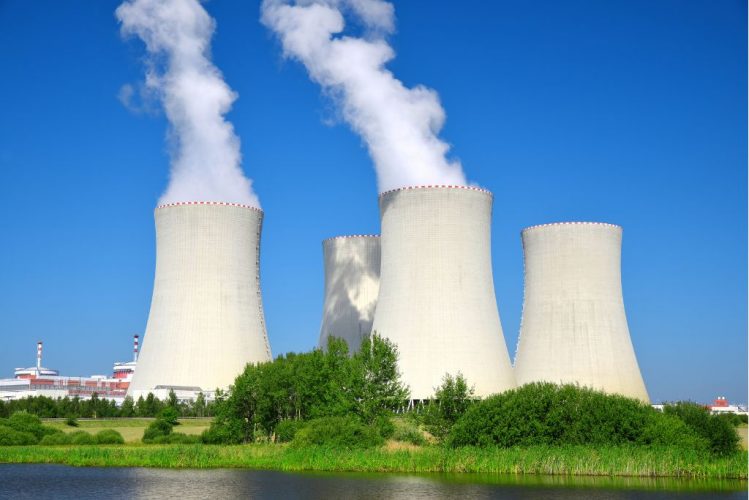
Measurements around modern nuclear power plants typically show radiation levels close to natural background levels. In other words, simply being near a nuclear plant does not place you in an abnormal radiation environment.
These comparisons do not suggest radiation is harmless. They demonstrate that context and scale matter.
A nuclear power plant is not a bomb, and it cannot behave like one.
Key differences include:
nuclear fuel is low-enriched and physically incapable of producing a nuclear explosion
reactions are controlled, not runaway
heat is generated slowly and continuously
power output is regulated through multiple independent systems
Modern nuclear plants are built around layered safety:
physical containment structures
passive cooling systems
redundant control mechanisms
conservative operating limits
The design philosophy assumes failures will occur—and ensures that those failures do not cascade into catastrophe.
Nuclear power is not risk-free. No energy system is.
However, when examined across decades of operation, nuclear energy has caused:
far fewer fatalities per unit of energy produced than fossil fuels
lower long-term environmental damage than many industrial activities
fewer uncontrolled releases than public perception suggests
High-profile accidents dominate memory precisely because they are rare. Their visibility distorts perception, while the far larger and ongoing harms from air pollution, mining, and combustion receive comparatively little attention.
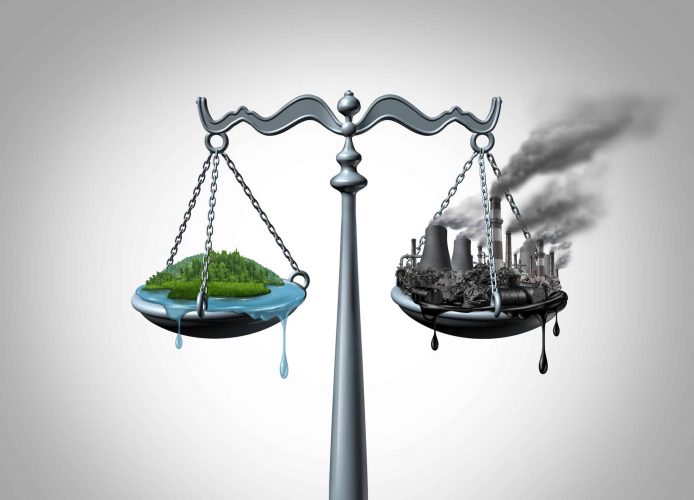
Risk assessment requires comparing like with like—not judging technologies in isolation.
Nuclear waste is often described as uniquely terrifying. In reality, it is one of the most tightly managed waste streams in existence.
Important facts:
total volumes are small compared to other industrial wastes
most nuclear waste is low- or intermediate-level
high-level waste is contained, tracked, and monitored
much “waste” still contains usable energy
Unlike many toxic chemical wastes, nuclear waste does not disappear into the environment unaccounted for. It is catalogued, isolated, and engineered for long-term containment.
Reprocessing technologies already exist that can significantly reduce waste volume and extract additional energy. These approaches are limited more by policy and politics than by physics.
Fear-driven policy does not just restrict power plants—it restricts research.
Areas affected include:
advanced reactor designs with improved safety and fuel efficiency
recycling and reuse of spent fuel
compact reactors for remote or industrial use
long-lived nuclear-derived power sources
Some experimental technologies already exist that convert radioactive decay into electricity for decades without refueling. These are currently expensive and niche—but history shows that costs fall when research is allowed to progress openly.
Suppressing exploration does not eliminate risk. It freezes technology in older, less optimal forms.
Caution is informed. Fear is not.
A rational approach to nuclear energy does not ignore risks—it evaluates them proportionally, compares them honestly, and manages them transparently. When nuclear power is discussed with precision rather than symbolism, it stops looking like a forbidden technology and starts looking like what it is: a powerful tool with strengths, limits, and responsibilities.
If society wants clean, reliable energy without massive land use or continuous material extraction, nuclear energy deserves to be understood—not mythologized.
Understanding does not demand agreement. It demands clarity.