
For centuries, the eastern Mediterranean lived inside a system that worked.
Cities rose behind walls of stone. Palaces kept records on clay tablets. Bronze—an alloy that required tin from afar and copper from elsewhere—flowed through trade routes that tied distant regions together. Kings wrote to kings. Grain moved by ship. Armies marched with standardized weapons. The world was ordered, interconnected, and confident in its own permanence.
Around 1200 BCE, that world unraveled.
Not in one place, and not all at once—but with a speed that would have been difficult for anyone living through it to comprehend.
At the end of the Late Bronze Age, large parts of the eastern Mediterranean were organized around centralized institutions. Palaces coordinated production, storage, and redistribution. Writing systems existed primarily to serve administration. Long-distance trade was not a luxury; it was structural. Entire economies depended on materials that could not be sourced locally.
This system produced wealth and stability, but it also created dependency.
Cities did not merely trade with one another; they relied on one another. A disruption in one region echoed outward. Grain shortages, metal shortages, or political instability did not remain local problems. They traveled along the same routes that once carried prosperity.
For a long time, those routes held.
Then the disruptions began to overlap.
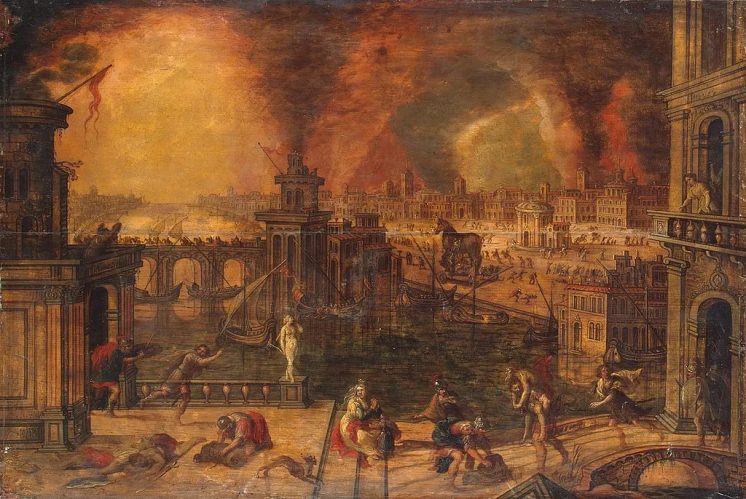
Archaeological layers across Greece, Anatolia, the Levant, and Cyprus show destruction, abandonment, or sharp decline within a relatively narrow span of time. Palatial centers ceased to function. Writing systems disappeared. In some regions, population levels fell dramatically. Trade goods that had once been common vanished from the record.
The collapse was not uniform. Some places were burned. Others were simply left behind. In Egypt, the state endured but withdrew from much of its former reach. Elsewhere, entire political systems ceased to exist.
What makes this episode unusual is not destruction alone, but the failure to recover. In many regions, complex administration did not return for generations.
Later observers searched for a single cause.
Warfare was an obvious candidate. Egyptian records describe hostile groups arriving by land and sea, later labeled the “Sea Peoples.” Fortifications were reinforced. Cities burned. Yet warfare alone does not explain why so many societies failed simultaneously, nor why recovery was so limited.
Climate stress has also been proposed. Evidence suggests periods of drought during this time, which would have strained agricultural systems already operating near their limits. Famine destabilizes politics quickly, especially where surplus is tightly controlled.
Earthquakes, internal rebellions, elite competition, and migration all appear in the archaeological and textual record.
None of these explanations are sufficient on their own.
What unites them is timing—and structure.
The Late Bronze Age world had become highly efficient but poorly buffered. Centralized control maximized output but minimized flexibility. Specialized production increased wealth but reduced redundancy. Long-distance trade expanded horizons while narrowing margins for failure.
When several stresses arrived close together—whether environmental, military, or political—the system lacked resilience. Local disruptions cascaded into regional failures. Institutions designed to manage stability proved unable to adapt to instability.
The collapse was not caused by ignorance. It was the result of confidence in a system that had worked for centuries.
By the early Iron Age, the map of the eastern Mediterranean looked different.
Smaller political units replaced empires. Writing returned slowly, often in new forms. Trade resumed, but on altered terms. Iron tools spread—not necessarily because they were superior at first, but because iron was locally available and did not depend on distant supply chains.
The world rebuilt itself, but it did so cautiously, and differently.
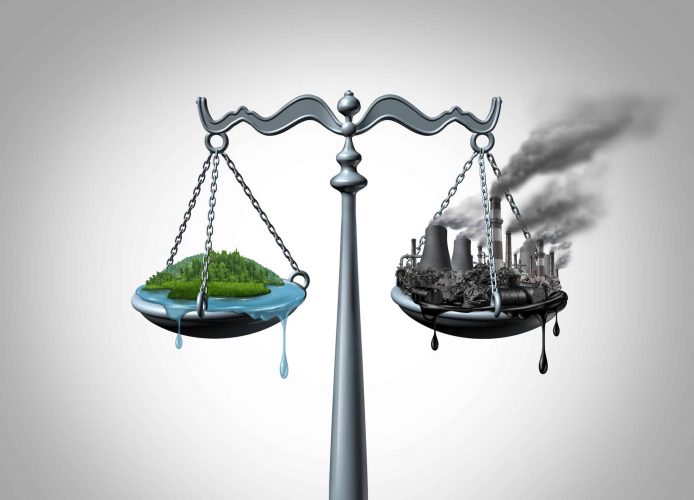
The Bronze Age Collapse stands as a reminder that complexity carries its own risks. Systems optimized for prosperity can become fragile under pressure. Interconnection can amplify strength—and transmit failure just as efficiently.
The mistake was not ambition, nor trade, nor organization.
It was the assumption that a finely balanced world would remain stable indefinitely.
When that balance shifted, there was no single lever to pull—only many systems failing together.