
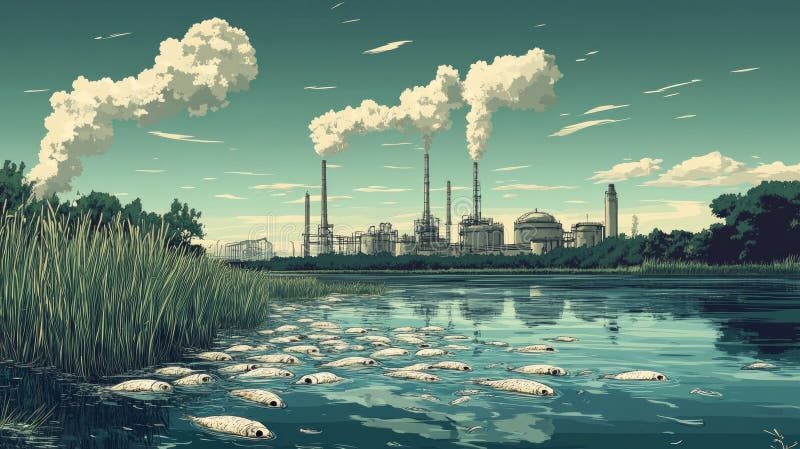
For decades, environmentalism rested on a simple foundation: protect nature, minimize harm, and preserve ecosystems for future generations. Forests, wetlands, wildlife, clean air, and clean water were not abstract ideas — they were tangible things worth defending in their own right.
In recent years, however, that foundation has begun to shift. Under the banner of climate action, activities that would once have been considered unacceptable environmental damage are increasingly defended, excused, or even celebrated — as long as they are framed as necessary to reduce carbon emissions.
This article is the first in the Green Corruption series. Its purpose is to explain how this shift happened, why it matters, and why honest environmental progress requires confronting uncomfortable trade-offs instead of hiding them.
Traditional environmentalism focused on local, observable impacts:
destruction of habitats
pollution of air and water
loss of biodiversity
irreversible landscape changes
Climate policy, by contrast, often focuses on global, abstract metrics, especially carbon dioxide equivalents and long-term temperature projections. These are important tools — but they operate on a different scale and timescale than ecosystems and communities.
As climate targets became politically dominant, a new hierarchy emerged:
Climate impact first, environmental impact second.
In practice, this means that if an activity can be justified as reducing emissions somewhere, environmental damage elsewhere is often treated as acceptable, temporary, or unavoidable.
A key driver of this shift is moral framing.
Projects are no longer debated primarily on whether they:
protect ecosystems
minimize harm
respect local environments
Instead, the central question becomes:
Does this help the climate transition?
If the answer is “yes,” objections are frequently dismissed as:
selfish
short-sighted
anti-science
or morally suspect
This reframing narrows debate. Once a project is labeled “necessary for the climate,” criticism can be portrayed not as environmental concern, but as opposition to progress itself.
Every large infrastructure project involves trade-offs. That reality has not changed.
What has changed is how openly those trade-offs are discussed.
In many climate-branded projects:
land use impacts are minimized
biodiversity loss is described as “manageable”
long-term ecological damage is deferred or abstracted
alternatives are framed as unrealistic
Environmental costs are often treated as accounting footnotes rather than central concerns. This creates the impression that climate solutions are environmentally clean by definition — even when they involve industrial-scale transformation of natural landscapes.
Environmental policy depends on public trust. When people see forests cleared, mountains blasted, or chemicals released — all justified as “green” — a disconnect emerges between rhetoric and reality.
That disconnect has consequences:
skepticism toward climate policy grows
legitimate environmental concerns are dismissed
communities feel sacrificed for abstract goals
support erodes even for necessary action
Ironically, tolerating environmental harm in the name of climate can undermine both environmental protection and climate goals.
The term “corruption” in this series does not imply secret plots or illegal acts in every case. Often, what is happening is entirely legal.
The corruption lies elsewhere:
in incentives that reward branding over outcomes
in political systems that favor speed over scrutiny
in narratives that excuse harm instead of confronting it
in the quiet acceptance of double standards
When environmental rules apply to some industries but are relaxed for others because they are labeled “green,” consistency is lost — and with it, credibility.
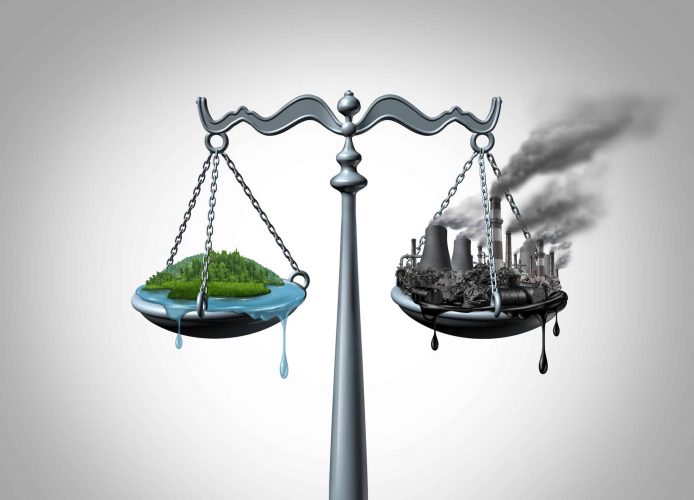
Climate protection and environmental protection overlap, but they are not identical.
A project can:
reduce emissions
and still destroy ecosystems
It can:
meet climate targets
while increasing local pollution or biodiversity loss
Treating climate metrics as a substitute for environmental stewardship is a category error. Carbon accounting does not capture soil health, wildlife corridors, water systems, or landscape integrity.
A serious environmental policy must address all of these at once, not trade one away in silence.
If climate action is to succeed without hollowing out environmental values, several principles must be restored:
Environmental damage should be acknowledged openly, not rebranded
Trade-offs must be debated, not morally dismissed
Local impacts deserve as much attention as global metrics
“Green” should describe outcomes, not intentions
Progress built on denial is fragile. Progress built on honesty is durable.
The climate challenge is real, and action is necessary. But when environmental harm is excused simply because it carries a climate label, something fundamental is lost.
This first article in the Green Corruption series sets the frame for what follows. In the articles ahead, we will examine concrete cases where nature is damaged, laws are bent, and risks are tolerated — all in the name of climate action.
Not to halt progress, but to make it real.
There will be 11 articles in Green Corruption series, one article will be released every Saturday.
The list below will be updated every week, adding the title and link to the next article.