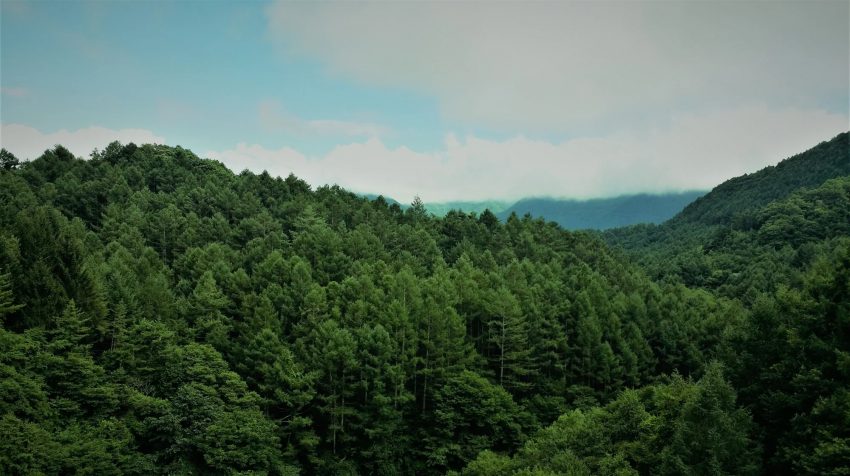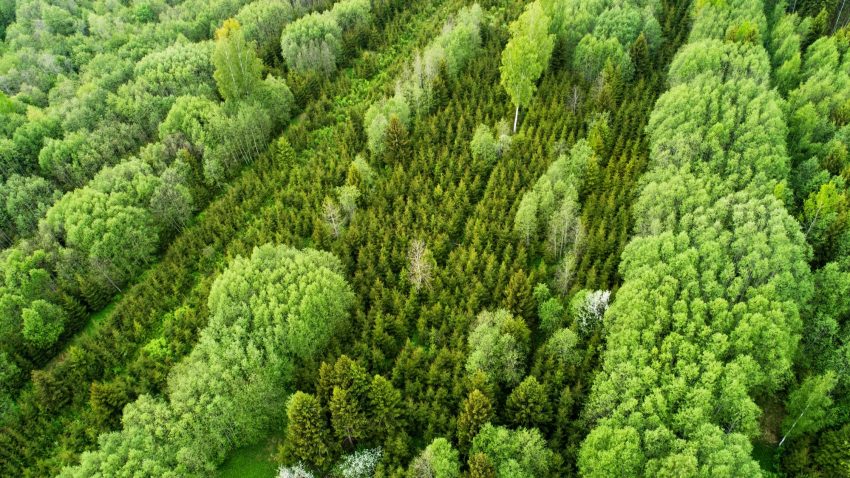

Over the past few decades, satellite observations have revealed a striking trend: large parts of the Earth are becoming greener. Vegetation density has increased across many regions, including areas that were once considered marginal for plant growth.
This phenomenon—often called global greening—is sometimes treated as surprising or controversial. In reality, one of its key drivers is well understood and grounded in basic plant physiology: higher carbon dioxide (CO₂) levels allow plants to use water more efficiently.
Understanding how this works requires starting at the leaf level.
Plants do not release water because they want to.
They lose water because they need CO₂.
To photosynthesize, plants open tiny pores on their leaves called stomata. Through these openings, CO₂ enters the leaf—but water vapor escapes at the same time. This process is known as transpiration.
The fundamental trade-off is simple:
To gain carbon, plants must lose water.
For most of Earth’s history, atmospheric CO₂ levels were low enough that plants had to keep stomata relatively open to acquire sufficient carbon.
When CO₂ concentrations rise, plants can absorb the same amount of carbon with smaller stomatal openings or over shorter periods of time.
The result is straightforward:
Less time with open stomata
Lower water loss per unit of carbon fixed
Higher water-use efficiency
This is not a theoretical idea. It is observed consistently in:
laboratory experiments
greenhouse studies
field trials
long-term ecological measurements
In practical terms, plants can now:
grow more using the same amount of water, or
survive longer under dry conditions before becoming stressed
The key metric here is water-use efficiency (WUE)—how much carbon a plant gains per unit of water lost.
As CO₂ rises:
photosynthesis often increases
transpiration per unit of growth decreases
This means vegetation becomes more resilient to:
limited rainfall
variable soil moisture
intermittent drought
It does not mean water is no longer important—but it means water goes further.
Satellite data over recent decades shows:
increased leaf area globally
expanding vegetation cover in semi-arid regions
longer growing seasons in some climates
A significant portion of this greening can be explained by:
CO₂ fertilization (more carbon available for photosynthesis)
Improved water-use efficiency
Land-use changes and management
Nitrogen deposition and other secondary effects
Importantly, greening is especially visible in dry and semi-dry regions, where water efficiency matters most. When plants lose less water per unit of growth, landscapes that were once marginal can support more vegetation.
It is important to be precise about what this does—and does not—mean.
Higher CO₂ does not:
eliminate droughts
replace rainfall
prevent heat stress
remove nutrient limitations
Plants still require:
water
suitable temperatures
soil nutrients
protection from extreme conditions
In very hot environments, plants may still close stomata entirely to avoid damage, regardless of CO₂ levels. The physiological benefit has limits.
But within those limits, it is real and measurable.
This mechanism is sometimes minimized in public discussion because it:
complicates single-cause narratives
shows biological systems adapting
introduces positive feedbacks alongside risks
Acknowledging it does not mean climate challenges disappear.
It means living systems respond dynamically, not passively.
Ignoring these responses leads to incomplete understanding.
The climate system includes:
physics
chemistry
biology
Plants are not static components. They respond to changing conditions in ways that can partially offset stresses—especially at local and regional scales.
Global greening is not proof that “everything is fine.”
But it is evidence that Earth’s biosphere is actively adjusting, and that CO₂ is not only a forcing agent—it is also a resource for plant life.
Serious analysis must account for both.
Rising CO₂ levels allow plants to reduce water loss while maintaining or increasing growth. This improves water-use efficiency and helps explain the widespread greening observed by satellites over recent decades.
This effect:
is well-established in plant physiology
is visible at ecosystem and global scales
does not negate other environmental constraints
but does meaningfully influence vegetation patterns
Understanding global greening requires recognizing not just what changes—but how living systems respond.
That response is real, measurable, and worth discussing honestly.