
Climate change is one of the most discussed topics of our time. It is also one of the most emotionally charged.
Part of this tension comes from a simple problem: measurement, cause, and consequence are often treated as the same thing — even though they are not.
Understanding the difference is essential for trust, clarity, and calm.
Global temperature is not measured by a single thermometer. It is reconstructed from thousands of weather stations, satellites, ocean buoys, and historical records, each with its own limitations.
One well-known challenge is station placement.
Many long-running weather stations are located:
Near cities or expanding urban areas
Close to buildings, roads, or asphalt
In environments that have changed significantly over decades
Cities are naturally warmer than surrounding rural areas — a phenomenon known as the urban heat island effect. Asphalt, concrete, and buildings absorb heat during the day and release it slowly at night, raising local temperatures even without broader climate change.
This does not mean temperature data is meaningless — but it does mean context matters.
Because these effects are known, climate scientists apply adjustments and comparisons:
Urban stations are compared with nearby rural stations
Long-term trends are checked against satellite measurements
Sudden changes caused by station relocation or local development are corrected
These methods reduce bias — but they cannot remove all uncertainty.
Importantly:
Adjustments are not evidence of deception. They are evidence that raw measurements are imperfect.
Different methods produce slightly different results, which is one reason climate models and datasets do not agree perfectly. This disagreement is not a failure — it is part of honest scientific work.
Carbon dioxide is a greenhouse gas, and increasing its concentration affects Earth’s energy balance. That is well established.
But climate is not controlled by a single variable.
Temperature is influenced by:
Water vapor and clouds
Aerosols and land use
Ocean circulation and heat storage
Natural variability over decades and centuries
This is why climate sensitivity is expressed as a range, not a precise number.
Recognizing complexity does not weaken climate science — it strengthens it.
Earth’s climate has never been static. Periods such as the Medieval Warm Period and the Little Ice Age remind us that natural variability is real and significant.
Acknowledging this does not mean current changes are entirely natural.
It means natural and human influences can coexist, and separating them is scientifically difficult.
History shows something else as well: human societies are remarkably adaptive.
One of the least discussed but most important facts about climate and society is this:
Deaths from weather-related disasters have declined dramatically over the last century.
Despite population growth and more reported extreme events, fatalities from storms, floods, droughts, and heatwaves are far lower than in the past.
The reasons are not mysterious:
Better forecasting
Stronger infrastructure
Improved healthcare
Faster communication
Greater overall wealth
Risk still exists — but vulnerability has decreased faster than hazards have increased.
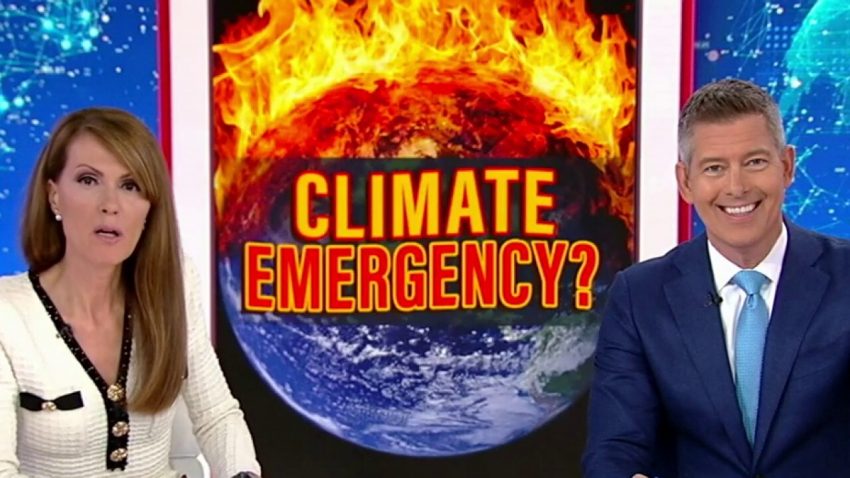
Public trust erodes when every unusual weather event is immediately framed as catastrophe, and when climate change is presented as the sole explanation for all problems.
This does not prepare societies to respond effectively.
It creates anxiety without improving resilience.
Clear communication requires:
Distinguishing weather from climate
Separating measurement uncertainty from physical trends
Focusing on real-world impacts, not just worst-case scenarios
Climate change is a real challenge — but it is not a single lever that controls human destiny.
The evidence shows both:
A changing climate
A rapidly improving human ability to cope with change
Hope is not denial.
Calm is not complacency.
Progress comes from measuring carefully, speaking honestly, and responding proportionally.